Lighting shapes the feel and purpose of a space while supporting everyday tasks. From workspaces to reading nooks, the right lighting level, especially foot-candles, which directly impacts comfort, focus, and productivity. A room may appear bright at first glance, yet after some time, discomfort sets in-reading becomes harder, or focus fades without an obvious reason. That subtle shift often stems from how light spreads across surfaces, not just its apparent strength.
A foot-candle measures how much light actually reaches a surface. This small but important detail explains why a space can look bright yet feel uncomfortable over time. It comes down to where the light lands and how evenly it distributes. Whether you’re working at a desk or reading a book, lighting plays a bigger role than it first seems.
This guide explains what a foot-candle is, how it is measured, and why it matters in daily life.
A foot-candle calculator removes much of the guesswork. It provides a simple way to verify if your lighting levels suit everyday activities. Small adjustments often make a space feel more natural, comfortable, and easier to live in.
What Exactly Is a Foot-Candle?
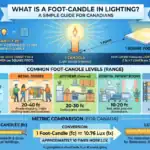
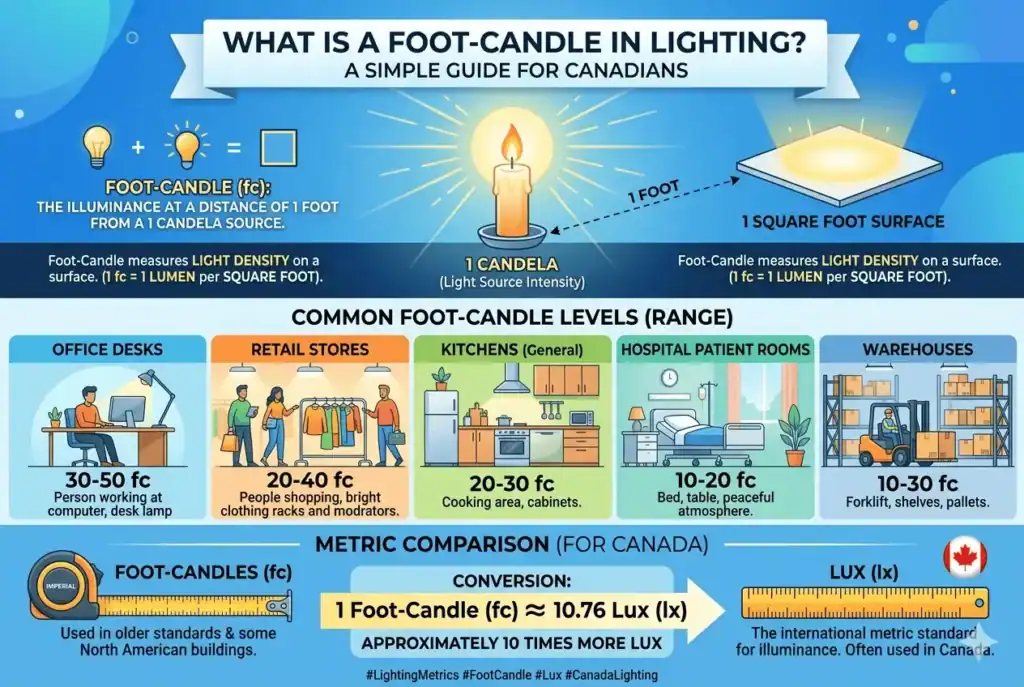
A foot-candle (fc, lm/ft², or ft-c) is a unit used to measure the intensity of light on a surface. One foot-candle equals one lumen per square foot.
This concept helps explain not just how bright a room appears, but how effectively light reaches the areas where you need it most, rather than focusing solely on a lamp’s rated output.
Imagine sitting in a quiet space
eading a book. The overall light feels soft and tranquil, yet after a few pages, tension builds in your eyes. The issue often lies in the light reaching the page, not the bulb itself. Foot-candles help quantify that real-world experience.
Lighting professionals prefer this unit because it focuses on results (light delivered to the surface) rather than raw output. Instead of asking how powerful a fixture is, they evaluate how much usable light reaches the work area. This distinction shapes smarter lighting design.
Why Does Light Intensity Matter in Everyday Spaces?
The brightness of a space influences how it feels long before you notice design details. Soft lighting creates a relaxing atmosphere, while well-balanced brighter light promotes alertness and clarity.
Different activities require different levels:
- Lower light feels cozy but can make fine details hard to see.
- Higher light improves precision yet can feel harsh or cause glare if unbalanced.
Consider a workstation in the evening. Dim lighting quickly tires the eyes, while overly bright light creates irritation and reflections. The right balance makes work feel easier and more natural.
Foot-candle measurements help identify the right adjustments, creating purposeful environments that support tasks without overwhelming the senses.
How Are Foot-Candles Measured?
Measuring (fc) requires focusing on the light that actually reaches the surface, not just the fixture’s output. A light meter provides accurate readings that reflect real conditions.
Measurements should be taken at the working plane, the desk, countertop, or floor, rather than at the light source itself. This approach delivers practical, useful results.
Several factors influence the final reading:
- Distance between the light source and the surface
- Angle at which light strikes the surface
- Presence of shadows or obstacles
- Reflective qualities of nearby surfaces
A room may look appealing initially, but measurements often reveal uneven illumination, dark corners alongside brighter central areas. This imbalance explains why some powerfully lit spaces still feel uncomfortable.
How Does a Foot-Candle Calculator Help?
A foot-candle calculator simplifies planning by estimating light intensity based on known values, such as fixture output, room size, and floor area. It gives a clearer picture of expected lighting levels before installation.
This tool helps you make confident decisions instead of guessing. For example, when setting up a study area, calculations can confirm whether your chosen light source provides enough brightness for comfortable reading. Minor tweaks can prevent eye strain later.
Calculators are valuable for homes, offices, and shared spaces. While real-world results vary with factors like surface colors and layout, they offer an excellent starting point for balanced lighting.
Where Do Foot-Candles Have the Most Impact?
Different environments need different lighting levels. The same setting rarely works for every activity.
- Reading areas typically require higher foot-candles for clear visibility (often 30–50 fc).
- Living rooms benefit from softer lighting (10–20 fc) to promote relaxation.
- Workspaces need even, sufficient brightness (30–50 fc or more for detailed tasks) to support focus without glare.
- Hallways work well with moderate levels (5–10 fc) for safe navigation, especially with children.
A small change in brightness can dramatically alter how a space feels. Too little light causes discomfort over time; too much can make it feel overwhelming. Paying attention to foot-candles creates areas that are both relaxing and practical.
How Can Lighting Design Improve with Foot-Candle Awareness?
Thoughtful, effective lighting rarely happens by chance, it comes from understanding how light interacts with surfaces and activities. Foot-candles make this interaction measurable.
Designers often work with layers of light:
- Ambient lighting for overall illumination
- Task lighting for specific activities
- Accent lighting to highlight features without overpowering the space
Foot-candle targets ensure each layer serves its purpose. A well-designed room doesn’t feel excessively bright or dim, it simply feels comfortable and intuitive. This comfort usually results from careful attention to light levels rather than the number of fixtures.
How Does Lighting Influence Comfort and Mood?
Lighting quietly shapes mood and atmosphere. Soft illumination feels calm and inviting, while brighter levels can boost focus and energy. Foot-candles help maintain the right balance for each space’s purpose.
For instance:
- A dining area benefits from softer lighting that encourages conversation.
- A study or workspace needs brighter, even light to support concentration.
Small adjustments in brightness often lead to noticeable improvements in comfort. The connection between light and mood goes far beyond technical details—it directly affects how we experience a space.
Why Is Understanding About Foot-Candles Can Be Useful
Grasping the concept of foot-candles shifts your focus from fixtures and bulbs to the actual experience within a space. Clarity, comfort, and ease all depend on how light lands on surfaces.
It provide a straightforward way to assess and improve lighting quality. Minor changes often yield significant benefits: reading becomes easier, work feels less tiring, and spaces feel more welcoming overall. In many ways, light becomes something you truly notice and appreciate, starting with a proper understanding of foot-candles.
Frequently Asked Questions
What exactly is a foot-candle?
A foot-candle measures how much light falls on a surface, one lumen per square foot. It reflects real brightness at the point of use, not just the bulb’s output, making it far more practical for everyday lighting decisions.
Why are foot-candles more significant than bulb wattage or lumens?
Wattage measures energy consumption, and raw lumens measure total light output. Foot-candles show how much light actually reaches the surface, helping create effective and comfortable lighting conditions.
Can a space seem bright but still have low foot-candles?
Yes, this is common. Powerful light sources may not deliver enough light to the surfaces if distance, angle, or obstructions reduce intensity. Placement matters greatly.
How many foot-candles are comfortable for reading?
Most people find 30–50 foot-candles comfortable for reading, though preferences vary. Task areas often benefit from the higher end of this range.
Do foot-candles affect long-term eye comfort?
Yes. Insufficient light makes tasks difficult and increases strain, while excessive or uneven light can cause glare and reflections. Balanced foot-candle levels promote better eye comfort over time.