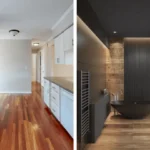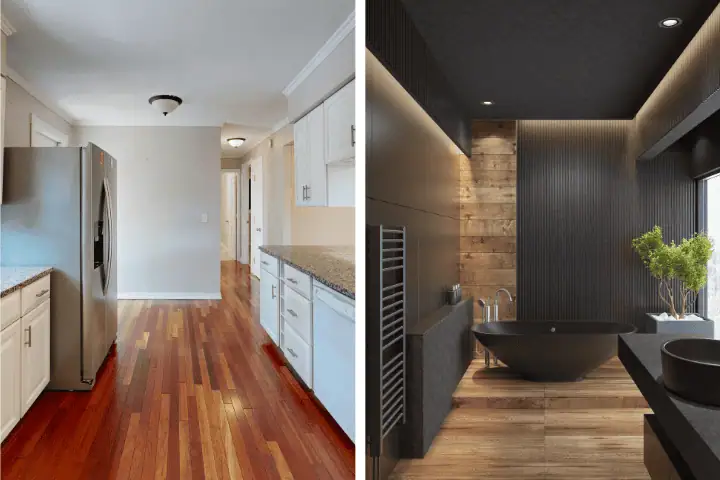
Hardwood floors are a source of tales. They reflect footsteps, attract sunlight and soften the busy spaces. A lot of homes are more peaceful after a wood-spread floor. Bathrooms and kitchens examine every surface in ways different rooms don’t. The effects of steam, water, and spills, and wear and tear raise serious questions that require truthful answers.
Homes change when individuals settle in. Kitchens gradually transform into social areas where meals last more than originally planned. Bathrooms are quiet to enjoy a few moments of peace either at the beginning or at the end of a day. Floors are used to create a quiet atmosphere.
They quietly influence how a space feels and how it performs year after year. Hardwood flooring in kitchens and bathrooms tends to divide opinions for that reason.
Warmth, Comfort, and Visual Flow
-
Pro: A Seamless Look Across Rooms
Hardwood creates continuity that few materials can match. When kitchens and nearby living spaces share the same floor, rooms feel connected rather than divided. Sightlines stay clean, and movement feels natural. Installing hardwood floors supports open layouts and visual flow without harsh breaks or transitions. Many people notice how spaces feel calmer once the flooring stops changing from room to room. That sense of flow often matters more than expected.
-
Pro: Natural Warmth Underfoot
Wood brings a softness that tile and stone rarely offer. Early mornings feel gentler when bare feet meet a warmer surface. Long cooking sessions feel less tiring when the floor does not feel cold or rigid. Many households choose installing hardwood floors for comfort alone. The warmth feels subtle, but it changes how people experience the space day after day.
-
Con: Less Cushion Than Alternatives
Hardwood floors add a bit of class, however it’s not easy for your body. Long hours in the kitchen may cause sore feet as well as achy knees and lower back. They require maintenance and regular clean-up. This matters most in homes where cooking takes time and happens often. Comfort improves with planning, yet the firmness remains part of the experience.
Durability, Wear, and Daily Life
-
Pro: Long Lifespan with Care
Quality wood ages with character rather than decline. Small scratches blend into the surface and tell a story of use. Refinishing restores beauty when wear builds up. Installing hardwood floors can provide years of service with steady maintenance. Numerous older homes show that hardwood is durable with proper maintenance even in busy households.
-
Pro: Timeless Appeal
Trends move fast. Colors, patterns, and finishes rise and fall. Hardwood remains steady through it all. Buyers recognize its appeal without explanation. Premium hardwood flooring in Brampton often attracts attention for this reason alone. The look feels familiar, reliable, and easy to live with. That sense of permanence adds quiet value.
-
Con: Surface Marks Show
Dropped pans leave dents. Pet nails leave fine trails. Chairs slide, shoes scrape, and kitchens see constant action. Installing hardwood in kitchens and bathrooms demands acceptance of visible wear over time. Some see these marks as flaws. Others see them as signs of life. Either way, wood does not hide impact the way some surfaces do.
Moisture, Spills, and Reality Checks
-
Pro: Improved Finishes Help
Modern sealants protect wood better than older coatings once did. Many finishes now resist moisture long enough for spills to get wiped up without damage. With quick action, wood stays safe in daily use. Due to these advancements, numerous households are now at ease installing hardwood floors in bathrooms and kitchens, particularly because of how they live.
-
Con: Water Still Wins
Standing water remains the biggest risk. Spills left unattended cause swelling, cupping, and warping. Bathrooms increase exposure through steam and splashes. Hardwood flooring in kitchens and bathrooms must be properly kept to manage humidity. If not, costly issues are likely to happen.
-
Con: Leaks Create Costly Repairs
Hidden leaks damage wood fast and often quietly. A slow drip under a sink or appliance spreads before signs appear. Repairs usually require plank removal and careful drying. Tile handles these situations better. Installing hardwood floors requires being conscious of any plumbing issues and fixing them prior to they become too severe.
Maintenance, Cleaning, and Effort
-
Pro: Simple Daily Care
Daily care stays straightforward. Sweep grit away. Dry mopping is the right way to prevent dust from getting settled. Make sure to clean up spills whenever they occur. Installing hardwood floors keeps routines simple, which helps consistency. Many people find this ease refreshing compared to more demanding surfaces.
-
Pro: Refinishing Brings Renewal
Few flooring options allow renewal instead of replacement. Refinishing rejuvenate the flooring and improve its depth. The floors get a new life and avoid ending up in landfills. Premium hardwood flooring in Brampton often earns praise for this long-term flexibility. The ability to reset the look adds reassurance.
-
Con: Limited Cleaning Methods
Steam mops damage wood finishes and force moisture into seams. Excess water dulls surfaces and weakens coatings. Care requires restraint and awareness. Installing hardwood in kitchens and bathrooms works best with mindful habits that avoid shortcuts and harsh tools.
Cost, Value, and Smart Choices
-
Pro: Strong Long-Term Value
Hardwood holds value well over time. A lot of buyers are looking to use it in communal living spaces and are pleasantly surprised whenever they encounter it. High-end hardwood flooring usually reflects this popularity. While trends change, wood continues to signal quality and permanence.
-
Pro: Repair Beats Replacement
When damage stays localized, individual boards can be replaced. Full tear-outs rarely become necessary with proper care. Installing hardwood floors allows targeted fixes that save money and preserve the rest of the space.
-
Con: Higher Initial Cost
Quality of the material and skilled workers will increase the upfront price. Hardwood is more expensive than laminate or vinyl at the time of installation. Flooring made of hardwood requires an initial commitment regardless of whether the value evens out in the future.
-
Con: Not Every Wood Suits Wet Areas
The choice of species is more important in bathrooms and kitchens as opposed to other places. Engineered wood can handle changes in moisture much better than the solid planks. Softer species dent faster. Installing hardwood in kitchens and bathrooms needs to be a careful choice, not impulsive decision.
Practical Tips for Better Outcomes
- Select the right wood
- Engineered hardwood resists moisture better
- Harder species reduce dents and wear
- Matte finishes hide scratches and scuffs
- Install with care
- Proper subfloor preparation matters
- Expansion gaps prevent seasonal buckling
- Professional installation prevents long-term risk
- Protect High-Risk Zones
- Use mats near sinks and dishwashers
- Ventilate bathrooms well after use
- Clean spills immediately, even small ones
Installing hardwood floors is a success when the plan follows daily patterns instead of battling against the floor.
Hardwood brings soul into practical spaces. Kitchens feel welcoming instead of purely functional. Bathrooms feel refined without becoming cold. Yet honesty matters. Hardwood flooring in kitchens and bathrooms encourages care, a sense of awareness as well as realistic expectations. It asks for balance between beauty and routine. Some homes thrive with it and never look back. Others prefer surfaces designed to handle constant water. Thoughtful choices shape lasting satisfaction. When expectations stay grounded, hardwood tells a story worth living with. For people weighing options, Best Tiles and Flooring help frame comparisons without pressure.
FAQs
What suits hardwood flooring in kitchens and bathrooms?
Engineered wood suits these areas best. It handles moisture changes better and stays more stable over time.
Why choose installing hardwood floors over tile?
Hardwood feels warmer, softens sound, and creates visual flow across rooms.
What makes hardwood flooring in bathrooms and kitchens last longer?
Quick spill cleanup, steady ventilation, and protective mats extend lifespan.
When does premium hardwood flooring in Brampton add value?
Quality hardwood adds value when installed well and maintained consistently.
Where should hardwood avoid bathrooms?
Avoid zones with standing water, including showers and tub surrounds.